
Welcome to visit ADA MED SUPPLY LIMITED
Phone:+86 13383897707
Email:ada-manikin@adaanatomy.com
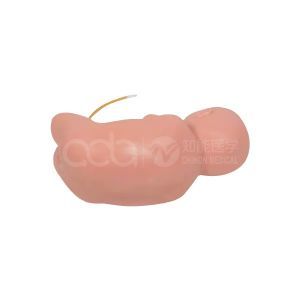

Quick answer. The BIX-L69B is a life-size infant model for lumbar puncture and CSF sampling practice, positioned laterally on a hard board or in a sitting position, with palpable spinous process spaces and posterior superior iliac spines, a 3rd–4th lumbar puncture site, a strong breakthrough sensation and simulated CSF outflow. Reference price is US \$294.60, including a spare spinal canal and puncture needle.
Infant lumbar puncture is a low-frequency, high-consequence procedure. Trainees may see only a handful during a paediatric rotation, and the procedure is often performed on a sick, moving baby. That combination — rare, urgent, technically fiddly — is exactly where simulation earns its place.
| Item | Detail | Why it matters |
|---|---|---|
| Size | Life-size infant | Landmark distances match a real patient |
| Positioning | Lateral decubitus on hard board, head flexed to chest, knees to abdomen; sitting position also possible | Teaches the two positions actually used in neonates and infants |
| Landmarks | Spinous process spaces and posterior superior iliac spines clearly palpable | The core skill: finding the level by landmark, not by eye |
| Puncture site | 3rd–4th lumbar intervertebral space | Matches standard infant practice |
| Feedback | Strong breakthrough sensation; simulated CSF outflow on correct puncture | Immediate confirmation without an instructor |
| Consumables | Spare spinal canal and puncture needle included | Unit is usable out of the crate |
Simulation-based deliberate practice improves infant lumbar puncture performance in trainees, and randomised trial evidence exists specifically for infant LP skills [1]. Just-in-time simulation has been used to screen residents for procedural readiness before they perform the procedure on a patient, which is the most defensible use of a trainer in a busy unit [2]. Paediatric residency programmes that introduced LP simulation reported improved procedural competence and confidence, and the effect was strongest when the model was paired with structured feedback rather than used for free practice [3].
The procurement implication: budget for instructor time and a short assessment, not only for the model. A trainer used without a checklist produces familiarity, not competence.
| Line item | Basis | Note |
|---|---|---|
| Model | One-off, US \$294.60 reference | Includes one spare canal and needle |
| Canal consumable | Per pack | The main recurring cost |
| Instructor time | 30 min per trainee | Include in the business case |
| Storage | Bench or trolley | No power required |
Quotation. Current price, consumable packs and lead time for the BIX-L69B are available from ada-manikin@adaanatomy.com; include your annual trainee numbers so the consumable estimate can be sized.
Q1. What age does the BIX-L69B represent? A life-size infant. It is not a preterm neonate model; confirm sizing if your unit trains neonatal staff.
Q2. Which puncture level does it use? The 3rd to 4th lumbar intervertebral space, with palpable spinous process spaces and posterior superior iliac spines.
Q3. Does it produce cerebrospinal fluid? Yes. Correct puncture simulates CSF outflow, which gives the trainee immediate confirmation.
Q4. What is included in the box? The model, a spare spinal canal and a puncture needle. The hard positioning board is required for the lateral position — confirm whether it is supplied.
Q5. How many punctures before the canal needs replacing? It depends on needle gauge and technique. Ask the supplier for an expected range and price a pack accordingly.
Q6. Is it suitable for nurse practitioner or PA training? Yes, wherever infant LP is in scope. Pair it with a competency checklist and a supervised clinical sign-off.
Product page: Buying an Infant Lumbar Puncture Trainer: The BIX-L69B Checklist — specification, packing data and a quotation request form.
For a quotation or consumable pricing on the BIX-L69B, write to ada-manikin@adaanatomy.com.






Leave a comment: