
Welcome to visit ADA MED SUPPLY LIMITED
Phone:+86 13383897707
Email:ada-manikin@adaanatomy.com
Article tag: Childbirth Mechanism Teaching Model/ BIX-F6/ F6/
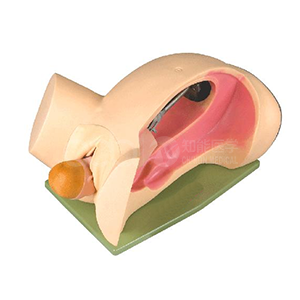
Model | BIX-F6 — Childbirth Mechanism Teaching Model |
Summary | Life-size childbirth mechanism model: mechanical demonstration of normal labor movements with precise uterine and pelvic landmarks for midwifery teaching. (154 chars) |
Type | Life-size obstetric teaching model, mechanical transmission (non-electronic) |
Demonstrates | The six cardinal movements of normal labor in sequence (mechanical linkage) |
Anatomy | Precise uterine and pelvic bony-contour landmarks, life-size human profile |
Simulation | Simulated birth-canal skin for realistic delivery-scene presentation |
Price | USD 294.6 (FOB, reference) |
Category | Pediatrics & GYN Models (F-series) |
Audience | Midwifery schools, medical schools (OB/GYN), nursing colleges, hospital OB education departments, low-cost basic teaching labs |
Educational-use note: anatomy/mechanism teaching model — educational equipment, not a medical device or pharmaceutical product and contains no medicinal ingredients (manufacturer's page notice). Confirm included parts, materials and any replacement components with the specification sheet.
The cardinal movements of labor — descent, flexion, internal rotation, extension, restitution with external rotation, and shoulder delivery — are the theoretical backbone of midwifery and obstetric education. But they are three-dimensional, continuous, and invisible: no student can watch them in a living patient, and static atlas diagrams cannot convey how the fetal head adapts to the pelvic axis over time.
Physical models close that gap. Simulation-based learning is a recognized method in midwifery education, used across low- to high-fidelity formats to build clinical knowledge before patient contact (Cooper et al., 2012). The F6 makes the mechanism of labor visible and repeatable: a mechanical transmission linkage moves the fetal head through the birth canal in the correct sequence, while precise uterine and pelvic landmarks anchor every step to real anatomy. Theory becomes something students can see, stop, and re-run.
Evidence | Finding | Why It Matters Here |
Cooper et al., 2012 (Women Birth) | Systematic review: simulation-based learning is effective in midwifery education across fidelity levels | Confirms the teaching method behind the F6 |
Cook et al., 2011 (JAMA) | Technology-enhanced simulation: large learning gains (effect sizes 1.09–1.20; 35,226 learners) | Hands-on model teaching is among the most effective methods |
Fleming et al., 2020 (J Am Coll Radiol) | Physical 3D models significantly raised anatomy exam performance (P<0.0001) | Models improve landmark knowledge — the same skill the F6 builds |
Draycott et al., 2008 (Obstet Gynecol) | Mandatory practical simulation training improved shoulder-dystocia management and neonatal outcomes | Birth-mechanism fluency underpins emergency skills |
Crofts et al., 2008 (Obstet Gynecol) | 450 shoulder-dystocia simulations showed inappropriate management drives poor neonatal outcomes | Practice on models converts knowledge into correct action |
Brogaard et al., 2022 (Acta Obstet Gynecol Scand) | Meta-analysis: simulation-based obstetric team training benefits patient outcomes | Mechanism mastery is the prerequisite for team drills |
Movement (official sequence) | What Students Learn |
Descent | The fetal head engages and descends through the pelvic inlet — continuous throughout labor |
Flexion | The head flexes so the smallest diameter (suboccipitobregmatic) presents |
Internal rotation | The head rotates to align the longest diameter with the widest pelvic dimension |
Extension | The head extends as it passes under the pubic arch and delivers |
Restitution & external rotation | The head rotates back to neutral; the shoulders align for delivery |
Shoulder delivery | Anterior then posterior shoulder delivered in sequence |
Each step is shown by the mechanical linkage at life size, with the uterine and pelvic bony contours as anatomical reference. Students see not just where the head goes, but why — the pelvis's shape dictating each movement.
Theory
1. (lecture, 20 min): name and sequence of the six movements.
F6 demonstration
2. (15 min): run the full delivery once, pausing at each movement.
Student practice
3. (15 min each): students operate the linkage themselves and narrate each movement.
Assessment
4. : students identify each stage on the model and explain its mechanism.
Model | Type | Role |
BIX-F6 | Mechanism teaching model (life-size, mechanical) | Fundamentals: how normal labor proceeds |
BIX-F9 | Cervical change & birth-canal relationship model (6 stages) | Cervical dilation + station visualization |
BIX-F50 | Comprehensive childbirth skills trainer | Hands-on delivery-procedure practice |
BIX-FW2 | Electronic pregnant-woman examination manikin | Palpation and examination skills |
BIX-FT2 / FT41 | Newborn nursing dolls | Newborn care after delivery |
Buying logic: the F6 is the theory-and-mechanism foundation of the obstetric suite — the lowest-cost entry point that makes labor mechanics visible before students move to procedural trainers (F50) or electronic exam manikins (FW2).
Station | Time | Activity |
A. Mechanism demonstration | 15 min | Full delivery sequence on F6, instructor narration |
B. Student narration drill | 15 min/student | Student operates linkage and narrates the six movements |
C. Paired with F9/F50 | 30 min | Bridge mechanism → dilation staging → hands-on delivery drill |
Criterion | Pass |
Names the six movements in correct order | Yes/No |
Identifies each stage on the model | Yes/No |
Explains why each movement occurs (pelvic adaptation) | Yes/No |
Item | Frequency | Notes |
Mechanism linkage | Per term | Check smooth operation; mechanical model — no electronics |
Surface cleaning | After each use | Wipe with standard disinfectant |
Storage | Always | Keep in supplied packaging; dry environment |
Q1: Is the F6 electronic? A: No — it is a mechanical-transmission teaching model. The linkage demonstrates the full normal-delivery sequence by hand operation, which keeps the cost low and makes it suitable for classroom and low-budget labs.
Q2: What exactly does it teach? A: The mechanism of normal labor — descent, flexion, internal rotation, extension, restitution with external rotation, and shoulder delivery — shown life-size against precise uterine and pelvic landmarks.
Q3: How is the F6 different from the F9 and F50? A: F9 shows cervical change and birth-canal relationships across six labor stages; F50 is a procedural childbirth trainer for hands-on delivery practice. The F6 teaches the underlying mechanism of normal labor — the conceptual foundation before procedural drills.
Q4: Who is it designed for? A: Midwifery schools, medical-school OB/GYN teaching, nursing colleges, and hospital education departments running mechanism-of-labor theory classes.
Q5: What is the MOQ and price? A: Reference price is USD 294.6. MOQ is 1 unit. Email ada-manikin@adaanatomy.com. for the current quotation and specification sheet.
Q6: What is the delivery time? A: Air freight 7–10 business days; sea freight 30–45 days. Contact ada-manikin@adaanatomy.com. for shipment options.
Simulation Based Learning in Midwifery Education: A Systematic Review — Cooper et al. (2012), Women Birth 25(2):64–78
Technology-Enhanced Simulation for Health Professions Education: A Systematic Review and Meta-analysis — Cook et al. (2011), JAMA 306(9):978–988
Effectiveness of Three-Dimensionally Printed Models in Anatomy Education for Medical Students and Resident Physicians: Systematic Review and Meta-Analysis — Fleming et al. (2020), J Am Coll Radiol 17(10):1220–1229
Improving Neonatal Outcome Through Practical Shoulder Dystocia Training — Draycott et al. (2008), Obstet Gynecol 112(1):14–20
Observations from 450 Shoulder Dystocia Simulations: Lessons for Skills Training — Crofts et al. (2008), Obstet Gynecol 112(4):906–912
The Effects of Obstetric Emergency Team Training on Patient Outcome: A Systematic Review and Meta-Analysis — Brogaard et al. (2022), Acta Obstet Gynecol Scand 101(1):25–36






Leave a comment: