
Welcome to visit ADA MED SUPPLY LIMITED
Phone:+86 13383897707
Email:ada-manikin@adaanatomy.com
Article tag: Full Body CPR Manikin with LCD Feedback/ BIX/CPR480/ CPR480/
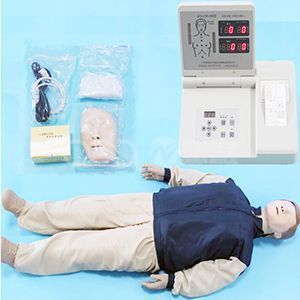
Focus Model | BIX/CPR480 — Full Body CPR Manikin with LCD Feedback |
Article Scope | Selection guide: CPR280 vs CPR480 vs CPR490 full-body electronic CPR manikins |
Summary | Buyer's comparison of CPR280 vs CPR480 vs CPR490 full-body electronic CPR manikins: feedback channels, assessment features, price, and which model fits teaching, certification, or hub-scale assessment. (156 chars) |
Price Reference | CPR280 USD 441.88 · CPR480 USD 471.32 · CPR490 on request |
Price note: list prices as published on adacpr.com/chinoncpr.com product pages at time of writing — confirm current pricing with ada-manikin@adaanatomy.com..
The BIX full-body electronic CPR line has three models whose prices overlap:
Model | List Price | Positioning |
CPR280 | USD 441.88 | Advanced teaching: pulse, pupil exam, LCD dual-channel + voice prompt |
CPR480 | USD 471.32 | Assessment-grade: three-parameter LED + digital feedback, exam mode |
CPR490 | On request | Flagship hub: four-parameter display, defibrillation training, printed transcripts |
The price gap between CPR280 and CPR480 is under USD 30 — so buyers choosing on price alone can easily pick the wrong tool for their actual use case. The gap between the "correct model" and the "almost-correct model" only shows up six months later, in a failed certification audit or a missing report at an assessment center.
This guide maps each model to a concrete institutional profile.
All three models train to AHA quality metrics — compression depth 5–6 cm, rate 100–120/min, 30:2 ratio (Panchal et al., 2020) — but they differ in what they measure and how they report it:
Feature | CPR280 | CPR480 | CPR490 |
Compression depth feedback | ✅ LED zone | ✅ LED green/red | ✅ digital display |
Compression rate | ✅ LCD counter | ✅ digital display | ✅ digital display |
Ventilation volume | ✅ volume light | ✅ 500–1000 ml indicator | ✅ digital display |
Hand-position monitoring | ❌ | ❌ | ✅ |
Error counters | ✅ correct/wrong counters | ✅ assessment score | ✅ full assessment |
Voice prompt | ✅ error explanation | ❌ | ❌ |
Pulse simulation | ✅ | ❌ | ❌ |
Pupil response exam | ✅ | ❌ | ❌ |
Defibrillation training | ❌ | ❌ | ✅ |
Printed transcripts | ❌ (via CPR490) | ❌ (via CPR490) | ✅ built-in printer |
Operating modes | Exercise / Exam / Custom | Assessment-grade | Training / Assessment |
Why feedback architecture matters is settled science: real-time feedback devices are associated with higher CPR quality during simulated resuscitation (Gilfoyle et al., 2023), and compression depth and rate are core quality components linked to survival (Meaney et al., 2013). The question is not whether to buy feedback — it is which feedback your program actually needs to deliver and document.
Who: Nursing schools, community BLS courses, hospital in-service training. Why: The CPR280 is the only model of the three with pulse simulation and pupil-response exam — extras that let instructors teach assessment skills (check pulse, examine pupils) alongside compressions, in dedicated Exercise/Exam/Custom modes with voice prompts that explain each error. Its dual-channel feedback (compression light + ventilation volume light) already exceeds what most entry models offer. Best for: curricula where the goal is learning and correcting — not documenting.
Who: Training centers running AHA-style skills testing, certification programs, and quality audits. Why: The CPR480 continuously monitors three parameters — depth, rate, and ventilation volume — with unambiguous LED/digital signals and an assessment-grade scoring mode (AC-powered, sealed sensor suite). At USD 471.32 it is the lowest-cost unit in the line that objectively assesses all three AHA-required metrics at once — the "minimum viable product" for certification-grade testing (see our detailed CPR480 electronic feedback guide). Best for: objective, repeatable skills checks where a score matters.
Who: Regional training hubs, high-volume certification centers, institutions that must produce records. Why: The CPR490 adds what 280 and 480 deliberately omit: hand-position monitoring, integrated defibrillation training, and a built-in printer for performance transcripts, plus full Training/Assessment dual modes. If your center must issue auditable records or run combined CPR + defibrillation stations from one unit, the 490 replaces two or three separate devices (see our CPR490 flagship guide). Best for: throughput + documentation at scale.
Scenario | Buying | Result |
Teaching program buys CPR490 for transcripts it never prints | CPR490 | Pays flagship premium for unused printer/defib |
Certification center buys CPR280 for scores it must document | CPR280 | No assessment-grade mode; report functionality absent |
Hub buys CPR480 for records and defib stations | CPR480 | Must add separate AED trainer + manual reporting |
Program matches model to workflow | 280/480/490 as profiled | Each dollar spent maps to a used feature |
Add the consumable reality: electronic models carry predictable consumable costs (face skins, lung bags). A program that overbuys capability spends twice — once at purchase, again across years of unused features.
Confirm the assessment mode
1. you need: CPR280 scores exercise/exam/custom; CPR480 is assessment-grade; CPR490 adds printed records.
Check power
2. : CPR480 runs on AC adapter; confirm field-deployment options if you train off-grid.
Request the accessory list
3. : practice pads, masks, lung bags — confirm what ships in-box for each model.
Ask for a bundled quote
4. : mixed fleets (e.g., CPR480 for assessment + CPR100A for practice stations) qualify for consolidated pricing.
Email ada-manikin@adaanatomy.com. with your program type and class volume — we will confirm current prices, accessory sets, and shipping.
Q1: What is the price difference between CPR280 and CPR480? A: CPR280 is USD 441.88 and CPR480 is USD 471.32 — a gap of under USD 30 per unit. The real difference is capability: CPR280 adds pulse, pupil exam, and voice prompts for teaching; CPR480 adds assessment-grade three-parameter scoring for certification testing.
Q2: Can the CPR480 print performance reports? A: No — the CPR480 provides real-time LED/digital feedback and scoring, but has no printer. If your center must issue printed transcripts, choose the CPR490 (built-in printer) or use the CPR480 for live scoring.
Q3: Which model is best for AHA-style certification exams? A: For objective, documented skills assessment, the CPR480 (three-parameter feedback + assessment mode) or CPR490 (full assessment + printed records). CPR280 is stronger for teaching scenarios where pulse/pupil assessment and voice-prompted error explanation matter more than formal scoring.
Q4: Do these models include defibrillation training? A: Only the CPR490 integrates defibrillation training. For CPR280/CPR480 stations, pair with a standalone AED trainer for combined CPR + defibrillation drills.
Q5: Can I mix models in one order? A: Yes — mixed fleets (assessment units + practice units) are common, and bundled orders qualify for consolidated pricing and shipping. Email ada-manikin@adaanatomy.com. for a proposal.
Q6: What is the MOQ and delivery time? A: MOQ is 5 units for electronic full-body models (single evaluation units available for institutional review). Air freight: 7–10 business days; sea freight: 30–45 days.
Part 3: Adult Basic and Advanced Life Support: 2020 AHA Guidelines for CPR and ECC — Panchal et al. (2020), Circulation 142(16 Suppl 2):S366–S468
Cardiopulmonary Resuscitation Quality: Improving Cardiac Resuscitation Outcomes — AHA Consensus Statement — Meaney et al. (2013), Circulation 128(4):417–435
Association of Real-Time Feedback and Cardiopulmonary-Resuscitation Quality Delivered by Ambulance Personnel — Gilfoyle et al. (2023), J Am Heart Assoc 12(20):e029457
Quality of CPR During In-Hospital Cardiac Arrest — Abella et al. (2005), JAMA 293(3):305–310
Technology-Enhanced Simulation for Health Professions Education: A Systematic Review and Meta-analysis — Cook et al. (2011), JAMA 306(9):978–988
Evaluation of Staff's Retention of ACLS and BLS Skills — Smith et al. (2008), Resuscitation 78(1):59–65






Leave a comment: