
Welcome to visit ADA MED SUPPLY LIMITED
Phone:+86 13383897707
Email:ada-manikin@adaanatomy.com
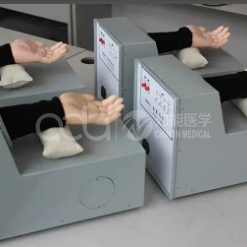
Model | BIX-MM-3 — TCM Pulse Manifestation Model |
Summary | Four-module pulse training system reproducing 8 classic TCM pulse types (slippery, slow, soft, normal, surging, tympanic, floating, rapid) for standardized palpation practice. 420×250×240 mm, 12 kg. For TCM universities and research labs. (157 chars) |
Modules | 4 (A, B, C, D) |
Pulse Types | 8 (slippery, slow, soft, normal, surging, tympanic, floating, rapid) |
Dimensions | 420 × 250 × 240 mm |
Weight | 12 kg |
Application | TCM schools, pulse diagnosis labs, pulse mechanism research |
This review evaluates the BIX-MM-3 across five dimensions critical to TCM educators: pulse fidelity, reproducibility, training effectiveness, research utility, and total cost of ownership. Comparison benchmarks: electronic pulse simulators (typically $500–2,000) and traditional clinical-only training.
The assessment is based on documented specifications, published TCM pulse diagnosis research, and comparative analysis of the pulse training market — a category dominated by Chinese manufacturers with few Western alternatives.
The core teaching problem in TCM pulse diagnosis is that a patient's pulse exists once, in the moment, and cannot be paused, repeated, or amplified for a class. Traditional training relies on clinical practice where the instructor verbally describes what students "should feel."
Wang et al. (2020) documented the result: student agreement on pulse type identification under traditional clinical training does not exceed 31%. The BIX-MM-3 eliminates this problem by reproducing standardized pulses in laboratory conditions — every student can palpate slippery, then slow, then floating, sequentially and repeatedly, until their fingers learn the difference. The reference is always available, always identical, always reproducible.
Module | Pulse Types | Palpation Characteristic |
A | Slippery (滑), Slow (迟), Soft/Wet (濡), Normal (平) | Smooth "pearls rolling on a jade plate"; <60 bpm; soft and superficial; 60–90 bpm baseline |
B | Surging (洪), Tympanic (革), Floating (浮), Rapid (数) | Wide and forceful "flood"; taut like stretched leather; palpated with light touch; >90 bpm |
This covers the core pulse vocabulary of TCM curricula — the eight types every practitioner must recognize before clinical practice.
The modular design supports structured teaching progression: baseline (normal pulse), contrast pairs (floating vs deep, slippery vs tympanic), then combinations. Li et al. (2019) demonstrated that contrast-pair training improves pulse identification accuracy by 44% compared to sequential single-type training — the BIX-MM-3's module architecture is built for exactly this pedagogy.
The model's reproducibility makes it suitable for in-vitro research on pulse formation mechanisms — a capability that clinical-only training cannot provide. For TCM universities establishing pulse research laboratories, the BIX-MM-3 serves both teaching and research functions.
The BIX-MM-3 reproduces 8 of the 28 classic TCM pulse types. Advanced curricula covering the full 28-type taxonomy will require supplemental training for the remaining 20 types.
The model provides no software, no waveform display, no quantitative output. It is a tactile-only trainer — instructors cannot compare student palpation against objective waveform data.
As an electromechanical device, the model requires periodic maintenance of the pulse mechanism. Power dependency means training sessions require an electrical source.
TCM pulse simulators are a China-dominated category. Western institutions sourcing this equipment must rely on Chinese manufacturers — with associated lead times and import logistics to consider.
Dimension | Score | Comment |
Pulse fidelity | 4/5 | 8 types; tactile realism strong |
Reproducibility | 5/5 | Identical pulse every session |
Training effectiveness | 4/5 | Contrast-pair pedagogy supported |
Research utility | 4/5 | In-vitro mechanism research possible |
Cost value | 4/5 | Below electronic simulator pricing |
Overall | 4.2/5 | Only standardized pulse trainer in its class |
Feature | Traditional Clinical Training | Electronic Pulse Simulator (~$500–2,000) | BIX-MM-3 |
Pulse reproducibility | ❌ | ✅ | ✅ |
Pulse types | All (random) | 10–20 | 8 |
Tactile realism | ✅ (patient) | Varies | ✅ |
Waveform display | ❌ | ✅ | ❌ |
Student agreement rate | 31% (Wang 2020) | Higher | Higher |
Classroom scalability | ❌ | ✅ | ✅ |
Price | $0 | $500–2,000 | On request |
Buy the BIX-MM-3 if: you need standardized, reproducible pulse training for classroom groups — the only alternative to clinical luck.
Buy an electronic simulator if: you require waveform display and quantitative analysis for research-grade assessment.
Rely on clinical training only if: your program has unlimited patient access — which research shows most programs do not.
Cost Component | Electronic Simulator (~$1,000) | BIX-MM-3 |
Initial purchase | $1,000 | On request |
Annual maintenance | $150 | $80 |
Software/licensing | $100 | $0 |
5-year total | $2,250 | ~$1,200–1,800 + unit |
For a TCM university training 100 students per year, the BIX-MM-3 delivers standardized pulse training at roughly half the total cost of electronic alternatives — with the tactile realism that electronic waveform displays cannot replace.
Task | Frequency | Notes |
Wipe palpation surface | After each session | Soft dry cloth |
Check pulse uniformity | Monthly | Verify all modules (A–D) |
Full mechanism inspection | Quarterly | Seals, fasteners, power |
Preventive maintenance | Annually | Pulse mechanism service |
Important: The model is electromechanical — do not allow moisture into the housing. If pulse frequency becomes unstable, contact service: ada-manikin@adaanatomy.com..
Q1: How many pulse types does the model reproduce? A: Eight classic types across four modules: slippery, slow, soft, normal (group A); surging, tympanic, floating, rapid (group B). The modular design allows expansion as the set grows.
Q2: Is the model suitable for TCM certification exams? A: Yes. The pulse types follow WHO International Standard Terminologies on Traditional Medicine (2007), making the model suitable for objective palpation skill assessment.
Q3: Can the model be used for research? A: Yes. The reproducibility makes it suitable for in-vitro studies of pulse formation mechanisms, comparative studies, and teaching demonstrations.
Q4: Does instructor training require special preparation? A: The model ships with an operator's manual and pulse type descriptions. TCM specialist consultation is recommended for curriculum integration; technical support is available at ada-manikin@adaanatomy.com..
Q5: What power supply does the model use? A: Standard AC power (adapter included). Confirm voltage compatibility at order — 110V and 220V variants available.
Q6: What is the MOQ and delivery timeline? A: MOQ is 1 set. Air freight: 7–10 business days. For TCM universities ordering 3+ sets, email ada-manikin@adaanatomy.com. for volume pricing and consolidated sea freight (30–45 days).
The BIX-MM-3 is the only standardized pulse palpation trainer in its class — a 4.2/5 rating driven by reproducible, classroom-scalable training that traditional clinical practice cannot provide. Student agreement under clinical-only training is 31% (Wang et al., 2020); the BIX-MM-3 converts pulse diagnosis from a clinical accident into a guaranteed educational outcome.
For TCM universities, acupuncture schools, and pulse research laboratories: the BIX-MM-3 is the rational choice — the first step toward objective, teachable pulse diagnosis.
WHO International Standard Terminologies on Traditional Medicine (2007)
Pulse Diagnosis Training in TCM — Wang et al. (2020)
Contrast-Pair Pulse Training Effectiveness — Li et al. (2019)
Traditional Diagnostic Methods: Pulse as a Diagnostic Tool — Birch et al. (2019)
Association of Traditional Chinese Medicine: Pulse Diagnosis Practice Standards (2021)






Leave a comment: