Welcome to visit ADA MED SUPPLY LIMITED
Phone:+86 13383897707
Email:ada-manikin@adaanatomy.com
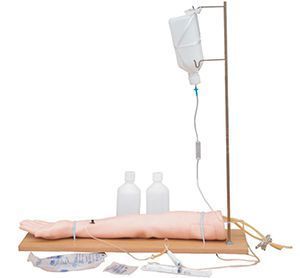
The BIX-HS9 is an injectable training arm supplied as a set: a PVC arm with moulded veins for phlebotomy, IV injection, blood transfusion and fluid infusion at the elbow and forearm, plus deltoid intramuscular injection on the upper arm. Reference price is US $471.36; the manufacturer product number is ADA-434.
Quick answer. The HS9 is worth its price when a lab needs one arm that carries four venous procedures plus a deltoid site, with the stand, tubing and bottles included. It is not worth it if you need electronic pass/fail feedback, arterial puncture or ultrasound-guided practice — the HS9 is a mechanical arm, not a simulator with sensors.
| Item | Specification | Why it matters |
|---|---|---|
| Model | BIX-HS9, product No ADA-434 | Use the number for spare skin orders |
| Procedures | 5: phlebotomy, IV injection, blood transfusion, fluid infusion, deltoid IM | One arm covers a full injection module |
| Sites | Elbow and forearm veins; deltoid | Antecubital and upper-arm technique in one model |
| Material | PVC with replaceable skin | Consumable skin is the recurring cost |
| Packing | 2 pcs/carton, 75 × 20 × 29 cm, 8 kg | Two arms per carton; plan in pairs |
| Reference price | US $471.36 | Includes the practice set, not just the arm |
The value of the HS9 is the kit, not the arm alone. The product is described as "with set", and the supplied configuration supports a complete station: arm, fluid reservoir, tubing and the accessories needed to produce blood return and infusion flow.
That matters for budgeting. A bare arm plus separately purchased tubing, bottles and replacement skin often costs more than a set, and mismatched tubing is the usual reason a new arm leaks on the first session.
Most training arms cover the first two. The transfusion and infusion functions are what make the HS9 useful for a second-year module, where students must manage tubing, drip rate and connection hygiene rather than just puncture.
Buy the HS9 if you run a nursing or phlebotomy lab that needs a durable arm covering venous access plus deltoid injection, and you are willing to stock replacement skin. Do not buy it if your assessment requires objective digital records, or if arterial and ultrasound skills are in the same module — those need dedicated trainers.
Q1. What procedures can the HS9 simulate? Phlebotomy, IV injection, blood transfusion and fluid infusion at the elbow and forearm, plus deltoid intramuscular injection.
Q2. Is the skin replaceable? Yes. The model is supplied with replaceable skin, and replacement sets are available as consumables.
Q3. Does it produce blood return? The venous system is designed to allow blood return when the reservoir is charged; confirm the setup procedure with the supplier.
Q4. Is it a full-body manikin? No. It is a single training arm with a practice set.
Q5. How is it packed? Two pieces per carton, 75 × 20 × 29 cm, gross weight 8 kg.
Q6. What is the price? The reference unit price is US $471.36, subject to order quantity and set configuration.
Contact. For the itemised set list, replacement skin pricing or a paired-arm quotation, email ada-manikin@adaanatomy.com. Product page: https://www.ada-manikin.com/nursing-model/injectable-training-arm-model-with-set-HS9 · Nursing models: https://www.ada-manikin.com/nursing-model · All articles: https://www.ada-manikin.com/neslist.html






Leave a comment: