Welcome to visit ADA MED SUPPLY LIMITED
Phone:+86 13383897707
Email:ada-manikin@adaanatomy.com
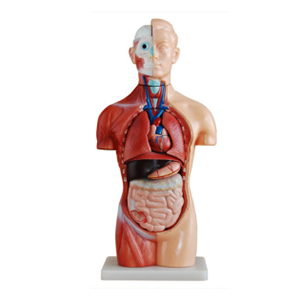
Short answer: BIX-A1047 is a 42 cm, 18-part asexual torso with a reference unit price of US $69.24. It is a compact model for nursing, medical and biology teaching. The purchase decision should not stop at the unit price: carton dimensions, gross weight, certification documents, spare organs and the number of units per student table determine the real landed cost.
Key takeaways
| Item | Published value | What you still need |
|---|---|---|
| Reference unit price | US $69.24 | Quote at your quantity and Incoterm. |
| Height | 42 cm | — |
| Parts | 18, dissectible | Itemised part list. |
| Material | Not stated | Body and organ material; cleaning compatibility. |
| Carton size | Not stated | Length × width × height per carton. |
| Gross weight | Not stated | Gross and net weight. |
| Units per carton | Not stated | Affects freight and unpacking labour. |
| Certification | ISO and CE claimed | Certificate numbers and scope. |
| Teaching format | Students per model | Units for 30 students | Product cost at US $69.24 |
|---|---|---|---|
| Demonstration only | 30 | 1 | US $69.24 |
| Small-group rotation | 5 | 6 | US $415.44 |
| Pair work | 2 | 15 | US $1,038.60 |
| One per student | 1 | 30 | US $2,077.20 |
These are product-cost only. Freight, duty, local delivery and spare organs are additional. The table is a planning tool, not a quotation; the unit price is explicitly “subject to the quantity of the order.”
Landed cost per unit = (unit price × quantity + freight + insurance + duty + local delivery + spare parts) ÷ quantity.
Two buyers can see the same US $69.24 and end up with very different landed costs. A single-unit order carries the full freight and customs clearance on one model; a 15-unit order spreads those costs. Ask the supplier for the carton data first, then ask a freight forwarder for a door-to-door quote using the actual volume and weight. Do not estimate freight from the product photo.
Duty depends on the HS classification and the importing country. We do not publish a rate here because it changes by destination and by the declared classification; confirm it with your customs broker before you compare suppliers.
A meta-analysis of comparative studies found an advantage for physical models in anatomy teaching [1]. A study comparing three-dimensional physical models with two-dimensional computer presentations reported superior learning with the physical models [2]. A 2026 systematic review of virtual anatomy tables, immersive techniques and 3D printing argues that these tools supplement, rather than replace, hands-on models [3].
The limitation is specific to the product: A1047 is an 18-part torso, not a full-body cadaver or a dissection specimen. It teaches organ position and removable-part relationships. It does not teach tissue planes, variation or dissection technique.
| Criterion | Weight | What a good answer looks like |
|---|---|---|
| Part list matches syllabus | 25% | Every required organ is named and removable. |
| Landed cost per station | 20% | Freight and duty included, not just unit price. |
| Material and cleaning | 15% | Compatible with your disinfection routine. |
| Certification evidence | 15% | Certificate numbers and scope, not a logo. |
| Spare-part availability | 15% | Published prices and lead times for organs. |
| Lead time and warranty | 10% | Written commitment tied to the PO. |
Send your syllabus and the scorecard to ada-manikin@adaanatomy.com with the model number BIX-A1047. We will return the part list, carton data and a quantity quotation against the same criteria, so the comparison is like for like.
Q1. What is the price of BIX-A1047?
The published reference unit price is US $69.24, subject to order quantity. Freight and duty are additional.
Q2. How many parts does it have?
18 dissectible parts. The page does not itemise them.
Q3. Is it life-size?
No. It is a 42 cm torso model, designed as a compact teaching model.
Q4. Is it suitable for nursing training?
The page lists medical schools, nursing training and biology classrooms as intended uses. It is an anatomy model, not a clinical procedure trainer.
Q5. What certifications are claimed?
ISO and CE are stated on the page. Request the certificate numbers and scope as part of the tender.
Q6. How do I get a quantity quote?
Email ada-manikin@adaanatomy.com with the quantity, city of delivery and required Incoterm. Ask for the 18-part list and carton dimensions in the same reply.
Write to ada-manikin@adaanatomy.com with your student count, teaching format and delivery city. If you are comparing A1047 with a larger torso, include both model numbers so the part lists and landed costs can be compared at the same level of detail.






Leave a comment: